
I had a need to identify the MAC address of a computer from an image (actually a whole bunch of images) recently and went looking through the registry to try solve my problem. Who doesn’t love a bit of registry analysis, and of course Eric’s tools come to the rescue yet again for this kind of hunting. Also side note, you should support Eric’s tool-making.
Testing A USB Write Blocker
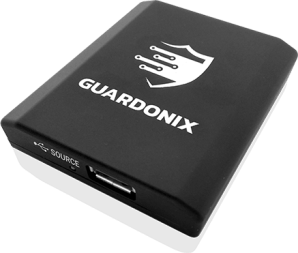
The makers of the Deepspar Disk Imager recently jumped into the write blocker scene with their Guardonix USB write blocker. They asked me for my opinion and (full disclosure) sent me out a test unit to play with.
AX200 – Magnet AXIOM Examinations Review

I recently had the opportunity to take the AX200 Magnet AXIOM Examinations class (On-Demand) and wanted to share my experience for those thinking about taking the class.
Full disclosure: I did get access to this course for free from Magnet in exchange for feedback, but they didn't ask me to write this post in return.
Whether On-Demand works for you or not is really personal preference; some people like that they can work through it at their own pace and repeat sections as required. My preference would have been to take the class in person as I feel like you get a better experience in the class, not to mention you can focus on the task at hand. Unfortunately I missed my opportunity as the class was run nearby when I was overseas.
2019 Forensic 4cast Awards Nominations
It’s nomination time again for the Forensic 4cast Awards, held at the SANS DFIR Summit in Austin, Texas. I thought I would post up my nominations to recognise all the people and teams that have contributed to the #DFIR community over the last year.
Lee changed things up a little bit this year, meaning that you have to provide a reason for your nomination. I think this is a good change and hopefully it will flow into the voting process, encouraging people to explain what they have done in the year for you to win their vote.
Updating the KnowledgeC Parser

I’ve just pushed up some changes to the amazing KnowledgeC plist extraction and parsing utility that I’ve been working on with Alexis Brignoni and wanted to describe them here.
Sunday Funday – File Access on MacOS Mojave
Had a bit of time so decided to enter this weeks Sunday Funday. I didn’t win, but figured I would share it for reference. Congrats to Amy for winning!
I didn’t do a very comprehensive test, I just accessed a picture and video with native apps and then did a keyword search, so hits were uncovered that may not all indicate file access, and nothing was done to determine ‘when’ files were accessed.
KAPE Tricks

For those that didn’t see, last week Eric Zimmerman, the creator of a number of fine forensics tools, released a new tool called KAPE, which is the Kroll Artifact Parser and Extractor. This tool provides examiners the ability to quickly collect files and folders into a storage location (folder/vhd/vhdx), and then parse them with various utilities.
Microsoft Office Reading Locations (Part 1)
Over the weekend I was looking at the “Reading Locations” subkey in the NTUSER.dat and found something interesting. I haven’t got a complete understanding yet, so I’ve labelled this as Part 1, but I have to figure some more stuff out for there to be a part 2.

What Did I Listen To On Spotify For iOS?
I had a recent examination where I was asked what music was someone listening to at a point in time on an iOS device. Here’s what I found! (TLDR at the bottom)
Quick Post: Notes on the Win10 Recycle Bin

Just a quick post on the Windows Recycle Bin whilst it’s fresh in my mind (also because I posted some findings on Twitter, and will definitely lose them if I want to refer back another time). I figure since I did the testing I should get it down somewhere. Already spent the time to do it so may as well get it down on paper so I don’t have to redo it again another time 🙂

